
Key Takeaways
- Match the covering to the room’s daily use, not just its décor.
- Consider daylight, privacy, moisture, drafts, and furniture placement together.
- Layering shades, blinds, shutters, and drapery can provide more flexible control.
- Choose cordless or motorized operation when safety and access are priorities.
- Measure carefully before ordering, especially around trim, handles, and sliding doors.
Choosing window coverings in The Seacoast, NH means thinking beyond color and fabric. Homes near the coast can experience bright reflected light, close neighboring properties, changing seasonal temperatures, and rooms that need to work hard all day. Whether you are updating a beach cottage, a Portsmouth-area historic home, or a newer family space, practical needs should guide the decision. Homeowners who already have interior shutters may also benefit from professional shutter repair in The Seacoast (NH) when panels, louvers, hinges, or operating parts no longer work smoothly.
The best treatment depends on the room’s purpose, the direction of the window, and how often the covering will be adjusted. A bedroom may need darkness and privacy, while a home office may need softer daylight that does not create glare on a monitor.
Start With the Room’s Main Job
There is no single best treatment for every Seacoast window. Begin by identifying what the room needs most. Ask whether direct sun heats the space, whether headlights or nearby homes affect privacy, whether a television or computer screen catches glare, and whether the window must remain easy to open. In rooms with children, pets, or hard-to-reach windows, the operating method deserves as much attention as the material.
See also: Streamlining Academic Printing for University Students
Balance Natural Light and Privacy
Light control and privacy are related, but they are not the same thing. A sheer or solar shade can soften strong afternoon light while preserving an outdoor view, which can be appealing in living rooms facing a yard, harbor, or tree-lined street. However, that same fabric may provide limited privacy after dark when interior lights are brighter than the outdoors.
Plan for Day and Night
- Use light-filtering shades where daylight matters but harsh sun does not.
- Choose room-darkening materials for bedrooms or street-facing rooms.
- Consider top-down operation when you want daylight above eye level and privacy below it.
- Check side gaps, bottom gaps, and the amount of overlap before expecting full darkness.
If a shutter is sticking, damaged, or no longer closing evenly, searching for shutter repair near me can be a practical first step before replacing an entire treatment. Repair can help preserve a look that already fits the home while restoring day-to-day light and privacy control.
Compare Window Covering Types
Roller and Solar Shades
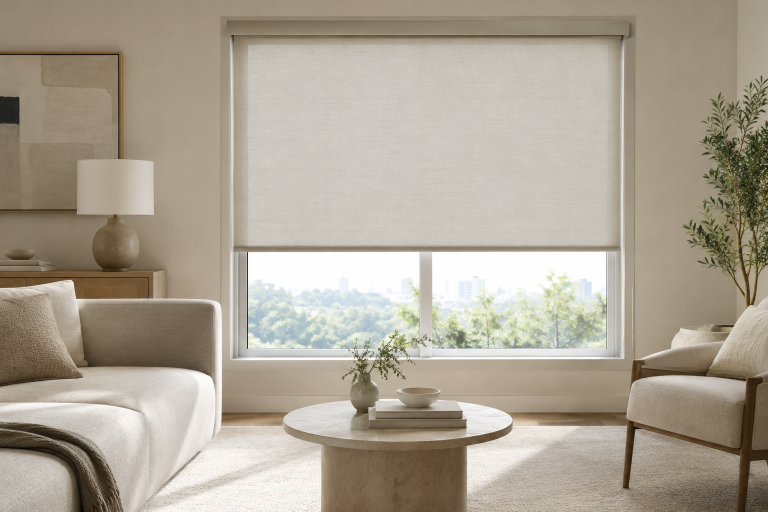
Roller shades offer a clean, low-profile appearance and work well in contemporary rooms, offices, and smaller windows. Solar fabrics can reduce glare while allowing some outward visibility, while room-darkening fabrics are better suited to sleeping areas.
Cellular Shades
Cellular shades have a folded construction that can add an insulating layer at the window. They are useful in bedrooms and in rooms that feel less comfortable near glass during winter or on sunny afternoons.
Blinds, Shutters, and Drapery
Blinds and shutters allow adjustable control over light direction. They can suit kitchens, bathrooms, and high-use family rooms when the chosen finish is easy to wipe clean. Roman shades and drapery add softness, texture, and visual warmth, making them especially useful when a living room or dining area needs a more finished look.
Choose Treatments Room by Room
Bedrooms
Prioritize privacy, darkness, and quiet operation. Room-darkening shades, lined drapery, or a layered combination can help control early morning light and nighttime visibility.
Living Rooms and Home Offices
For living rooms, balance glare reduction with a welcoming amount of daylight. Pairing a light-filtering shade with decorative side panels can offer both. In home offices, select a treatment that limits screen reflections without turning the room into a dim workspace.
Kitchens, Bathrooms, and Doors
Choose moisture-tolerant, easy-clean finishes near sinks, tubs, and cooking areas, where the humid, salt-tinged air common along the New Hampshire coast can speed wear. For sliding doors and wide windows, make sure the treatment stacks, slides, or rolls out of the way without blocking access.
Consider Seasonal Comfort
Window coverings can support comfort through the Seacoast’s cold, windy winters and humid summers by reducing direct sun and creating an additional layer between the room and the glass. The U.S. Department of Energy notes that the proper use of interior shades and blinds can reduce unwanted solar heat gain while helping homeowners make use of daylight. Results vary with the window itself, its orientation, the material, and how consistently the covering is used.
- Close sun-facing coverings during the brightest, warmest part of the day.
- Use insulating shades in rooms that feel drafty during colder weather.
- Inspect edge gaps if glare or temperature discomfort continues.
Review Safety and Operating Options
For homes where young children visit or live, cordless products are the safest choice. The Consumer Product Safety Commission recommends cordless window coverings when young children are present because accessible cords can create a strangulation hazard. Motorized controls can also be helpful for tall windows, wide openings, and windows behind furniture.
Measure Before Buying
Accurate measurements affect coverage, appearance, and smooth operation. First decide between an inside mount and outside mount. Then measure the width in three places and the height in three places. Check window depth, trim, locks, cranks, vents, and handles before ordering. Finally, consider where the shade, blind, shutter panel, or drapery will sit when fully open.
Final Checklist
- Main goal: privacy, darkness, glare control, comfort, style, or convenience.
- Room conditions: moisture, sun exposure, traffic, pets, children, or limited access.
- Light level: sheer, light-filtering, room-darkening, or blackout.
- Operation: manual, cordless, top-down, bottom-up, or motorized.
- Maintenance: dusting, wiping, laundering, or professional repair.
Conclusion
The right window covering for a Seacoast home should make each room easier to live in through every season. Start with privacy, light, comfort, safety, and maintenance needs. Once those practical details are clear, it becomes much easier to select a treatment that also complements the home’s style.